


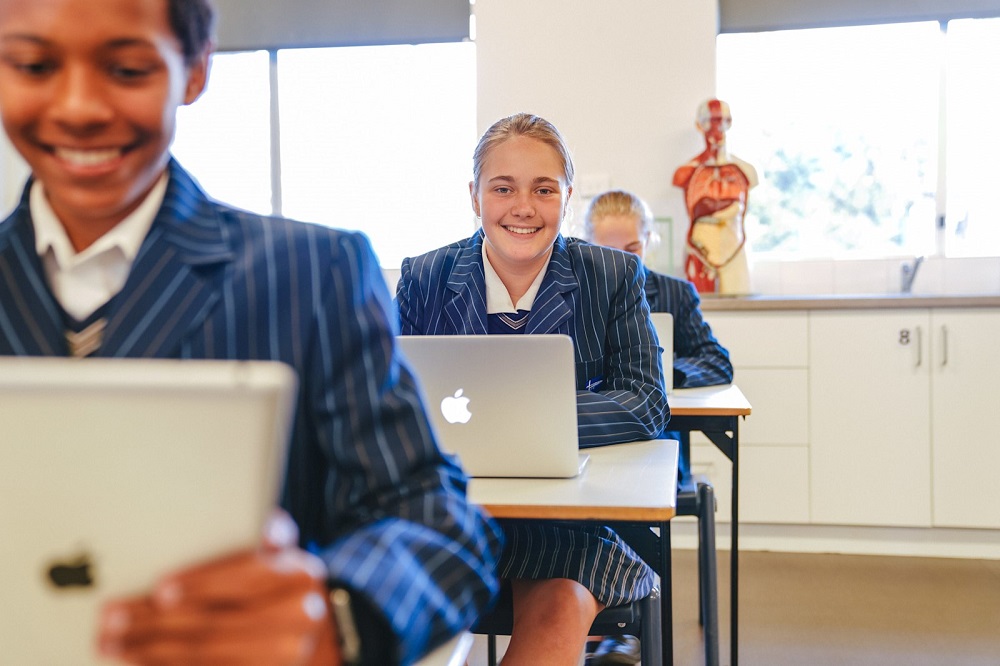
The modern classroom has undergone a radical transformation over the last two decades. The traditional image of rows of wooden desks, chalkboards, and heavy paper textbooks is rapidly being replaced by dynamic, digitally integrated environments. This shift is not merely about replacing paper with screens; it is a fundamental restructuring of how students process information, manage their time, and produce work. Educational technology, or EdTech, has emerged as a primary driver of student productivity, offering tools that streamline administrative tasks and enhance cognitive focus. By automating the mundane and amplifying the creative, technology allows students to achieve more in less time, preparing them for the fast-paced demands of the 21st-century workforce.
Centralization of Resources and Time Management
One of the most significant barriers to student productivity is the fragmentation of information. In a traditional setting, a student might have a physical planner for deadlines, a separate notebook for each subject, and a stack of handouts that are easily misplaced. EdTech solves this through Learning Management Systems (LMS) such as Canvas, Google Classroom, and Blackboard.
These platforms act as a centralized digital hub. When a student logs in, they see a comprehensive view of their academic life: upcoming deadlines, grades, reading materials, and communication from instructors. This centralization eliminates the “search cost” of education. Instead of spending twenty minutes looking for a specific worksheet or trying to remember when an essay is due, a student can access that information in seconds. This reclaimed time is then redirected toward actual learning and assignment completion. Furthermore, many of these systems integrate with digital calendars that provide automated reminders, helping students develop better organizational habits and reducing the likelihood of last-minute cramming.
Enhancing Research Efficiency and Information Synthesis
The process of academic research has been completely revolutionized by digital access. Historically, research involved hours of navigating library stacks, manually scanning indexes, and photocopying pages. While the skill of physical research remains valuable, the speed offered by digital databases like JSTOR, Google Scholar, and university e-libraries is unparalleled.
Productivity in research is not just about finding sources; it is about organizing them. Modern EdTech tools allow students to use digital annotation features and citation managers. Instead of manually typing out bibliographies, students use software that formats citations instantly in APA, MLA, or Chicago styles. This automation reduces the cognitive load associated with technical formatting, allowing the student to focus entirely on the quality of their arguments and the synthesis of their ideas. When the mechanical aspects of writing a research paper are simplified, the intellectual output increases in both volume and quality.
Collaborative Tools and Real-Time Feedback
Productivity is often hindered by the “waiting period”—the gap between submitting work and receiving feedback, or the time lost trying to coordinate schedules for a group project. Collaborative technology has effectively closed these gaps.
Cloud-based platforms like Google Workspace and Microsoft 365 allow multiple students to work on a single document simultaneously. This eliminates the need for “versioning,” where students email files back and forth, often losing track of the most recent draft. In a collaborative digital environment, group members can see each other’s contributions in real time, leave comments, and resolve issues instantly.
From an instructional standpoint, teachers can provide “in-flight” feedback. Rather than waiting until an assignment is turned in to realize a student is off-track, an instructor can view a student’s progress on a shared document and provide a quick digital nudge or correction. This immediate feedback loop prevents students from wasting hours on incorrect assumptions, ensuring that their effort is always directed toward the correct learning objectives.
Personalization through Adaptive Learning Software
Every student has a unique “productivity curve” based on their existing knowledge and learning speed. Traditional lectures often move too fast for some and too slow for others, leading to disengagement or frustration—both of which are productivity killers.
Adaptive learning technology uses algorithms to assess a student’s performance in real time and adjust the difficulty or type of content accordingly. If a student masters a concept in mathematics quickly, the software moves them to the next challenge rather than forcing them to complete fifty repetitive problems. Conversely, if a student struggles, the technology provides supplementary resources and different explanations until the concept is grasped. This personalized approach ensures that a student is always working at the edge of their ability, maximizing the educational value of every minute spent studying.
Distraction Management and Digital Focus
A common criticism of technology in education is that it provides a gateway to distraction. However, a specific subset of EdTech is designed specifically to combat this issue and improve deep-work capabilities. Productivity applications now allow students to “lock” their devices into a specific mode where only educational apps are accessible.
-
Focus Timers: Tools based on the Pomodoro Technique help students break their work into intense bursts of focus followed by short breaks, preventing burnout and maintaining a high level of mental output.
-
Site Blockers: Students can temporarily disable social media or entertainment sites during study hours, creating a digital “study hall” environment.
-
Audio Environments: Specialized applications provide ambient noise or scientifically backed “focus music” to help students enter a flow state in noisy environments like dorms or coffee shops.
By using technology to regulate their own digital behavior, students learn the essential professional skill of digital discipline, which is a cornerstone of modern productivity.
Accessibility and Inclusivity
Productivity is a relative term; for students with disabilities, technology is often the primary factor that allows them to be productive at all. EdTech has leveled the playing field through a variety of assistive tools:
-
Speech-to-Text: Students with dysgraphia or physical impairments can dictate their thoughts, allowing their writing speed to keep pace with their cognitive speed.
-
Text-to-Speech: This allows students with visual impairments or dyslexia to “read” through auditory channels, often at an accelerated pace.
-
Translation Tools: For English Language Learners, instant translation and real-time captioning during lectures ensure they are not falling behind due to language barriers.
When the barriers to basic participation are removed, these students can focus their energy on demonstrating their mastery of the subject matter, significantly increasing their academic output.
The Role of Artificial Intelligence in Student Workflow
As we look toward the future, Artificial Intelligence (AI) is becoming an integral part of the student productivity toolkit. While much of the public discourse focuses on the risks of academic dishonesty, the legitimate uses for productivity are vast. AI can act as a 24/7 tutor, explaining complex concepts in simpler terms or providing practice questions based on a student’s notes. It can help students brainstorm outlines for large projects, summarize long articles to determine their relevance, and check code for errors in computer science courses. By handling the “pre-work” of organization and clarification, AI allows students to spend more time on high-level critical thinking and original creation.
Conclusion
Educational technology is not a magic solution that replaces the need for hard work and discipline. However, it acts as a powerful force multiplier. By organizing information, facilitating instant collaboration, personalizing the learning pace, and removing accessibility barriers, EdTech allows students to navigate their academic journeys with unprecedented efficiency. As these tools continue to evolve, the definition of student productivity will shift from “how much time was spent studying” to “how much meaningful knowledge was mastered and applied.” In this new paradigm, technology is the essential engine of academic success.
Frequently Asked Questions
Does the use of multiple digital tools actually lead to cognitive overload rather than productivity?
While “app fatigue” is a real phenomenon, the goal of effective EdTech is integration rather than accumulation. When schools use a single, comprehensive Learning Management System that connects with other tools, it actually reduces cognitive load. The key to maintaining productivity is selecting a few high-impact tools that communicate with each other, rather than jumping between dozens of disconnected applications.
Can technology help students who struggle specifically with procrastination?
Yes. Procrastination is often a response to feeling overwhelmed by a large, amorphous task. EdTech tools help by breaking large projects into smaller, trackable sub-tasks with their own micro-deadlines. Seeing a “progress bar” or checking off small digital boxes provides dopamine rewards that can help students build momentum and overcome the initial resistance to starting a project.
Are digital notes as effective as handwritten notes for long-term retention?
Research suggests that handwriting notes can be better for conceptual understanding because it forces the student to summarize information. However, digital note-taking increases productivity by making notes searchable, shareable, and permanent. Many students now use hybrid approaches, such as using a stylus on a tablet, which combines the cognitive benefits of handwriting with the organizational power of digital storage.
How does educational technology assist in the development of soft skills?
Productivity in the modern world involves more than just individual task completion; it involves teamwork. Tools like shared documents, project management boards, and video conferencing software teach students how to coordinate with others, manage a pipeline of work, and communicate professionally in a digital environment. These are the exact productivity skills required in most professional careers.
Does reliance on EdTech reduce a student’s ability to work without it?
Technology should be viewed as a tool, not a crutch. Just as a calculator allows a mathematician to focus on complex theory rather than long division, EdTech allows students to focus on higher-order thinking. The goal is to automate the mechanical tasks so that the human mind can do what it does best: create, analyze, and solve problems.
Is there a productivity gap between students who have access to high-end tech and those who do not?
The “digital divide” is a significant concern. Students with high-speed internet and modern devices generally have a productivity advantage. This is why many educational initiatives focus on “1-to-1” programs, ensuring every student has a device, and providing offline modes for software so that students can continue to be productive even without a constant internet connection at home.
How can students ensure they aren’t using “productivity tools” as a way to avoid actual work?
This is sometimes called “productive procrastination,” where a student spends hours perfecting their digital filing system or color-coding their calendar instead of studying. To avoid this, students should focus on output-based metrics. A tool is only effective if it results in more words written, more problems solved, or a deeper understanding of the material. If the tool itself becomes the primary focus, it is no longer serving its purpose.
