


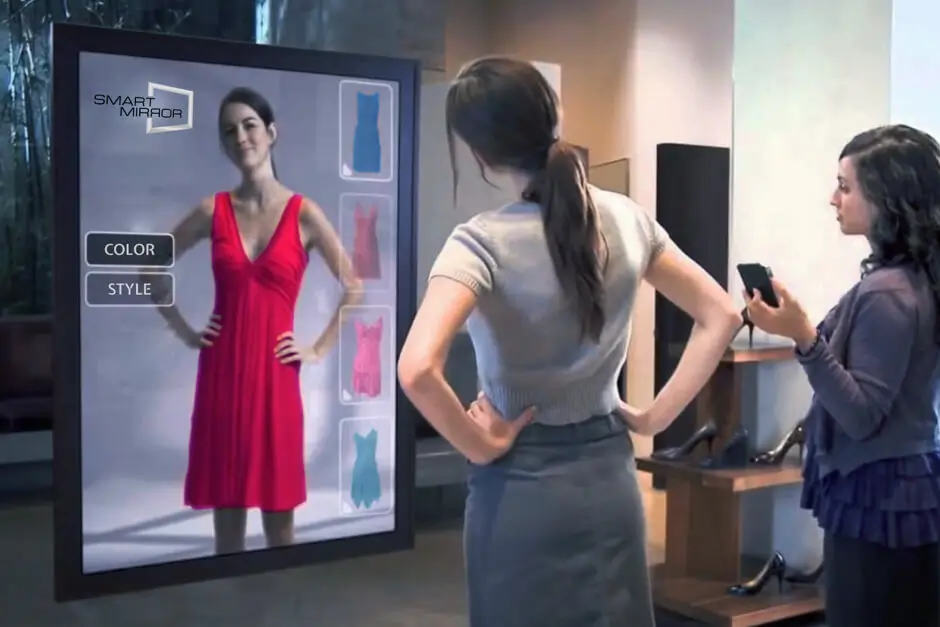
The retail landscape has undergone a seismic shift over the last decade. As e-commerce platforms became increasingly sophisticated, offering personalized recommendations and one-click purchasing, brick-and-mortar stores faced a crisis of relevance. To draw consumers back into physical spaces, retailers have had to move beyond mere transactions and toward experiential commerce. At the forefront of this digital-physical convergence is the smart mirror. Far from being a futuristic novelty, smart mirrors are becoming essential tools that blend the convenience of online shopping with the tactile, immediate gratification of the in-store environment. These interactive displays are not just reflecting the customer; they are reflecting a new era of retail efficiency, personalization, and engagement.
The Convergence of Reflective Surfaces and Augmented Reality
At its core, a smart mirror is a two-way mirror with an integrated electronic display behind the glass. These devices utilize a combination of cameras, sensors, and augmented reality (AR) software to overlay digital information onto the user’s reflection. In a retail context, this technology allows for a “virtual try-on” experience that bypasses many of the traditional friction points of shopping.
For instance, in the beauty and cosmetics sector, smart mirrors allow customers to see how different shades of lipstick, eyeshadow, or foundation would look on their skin without the need for physical testers. This is not only more hygienic but significantly faster, allowing a customer to “try on” dozens of products in a matter of minutes. The AR software tracks the contours of the face in real-time, ensuring that the digital overlay moves naturally with the user, creating a convincing and immersive preview of the product.
Enhancing the Fitting Room Experience
The fitting room has traditionally been a place where sales are either won or lost. However, it is also where the most friction occurs—customers often find themselves with the wrong size or color and are forced to get dressed and return to the sales floor, or simply abandon the purchase altogether. Smart mirrors placed within the fitting room are solving this dilemma.
Equipped with Radio Frequency Identification (RFID) technology, these mirrors automatically recognize the items a customer has brought into the room. The display then shows the product details, available sizes, and alternative colors. If a customer needs a different size, they can simply tap the mirror to alert a sales associate. This creates a seamless service loop that keeps the customer engaged and reduces the likelihood of a lost sale. Furthermore, these mirrors can suggest complementary items—such as a belt to go with a pair of trousers or a scarf to match a coat—effectively acting as an automated personal stylist that drives up the average transaction value.
Data-Driven Personalization and Consumer Insights
One of the greatest advantages online retailers have over physical stores is the ability to track every move a customer makes. Smart mirrors are finally bringing that level of data granularity to the physical world. For retailers, these devices are powerful data collection hubs. They can track which items are taken into fitting rooms most frequently, which items are tried on but never purchased, and how much time customers spend interacting with specific products.
This data is invaluable for inventory management and store layout optimization. If a specific dress is tried on fifty times in a week but never bought, the retailer can investigate whether there is an issue with the fit or the price point. Additionally, when integrated with a brand’s loyalty program, smart mirrors can recognize returning customers through their mobile devices, pulling up their purchase history and style preferences to offer truly personalized recommendations. This level of service creates a “high-touch” experience that makes the consumer feel valued and understood.
Overcoming the Logistics of Inventory with Virtual Endless Aisles
Physical stores are limited by their square footage. It is impossible to stock every color and size variation of every product on the floor. Smart mirrors enable what is known as a “virtual endless aisle.” If a customer loves a specific jacket but the store is out of their size, the smart mirror can display the item in the correct size and allow the customer to purchase it right there on the glass.
The item is then shipped directly to the customer’s home or made available for pickup at a later time. This ensures that the physical store remains a point of discovery and engagement without being hampered by the logistical constraints of physical inventory. It turns the retail space into a showroom where the digital and physical inventories are unified into a single, cohesive offering.
The Role of Social Integration and User-Generated Content
Modern consumers, particularly Millennials and Gen Z, view shopping as a social activity that is meant to be shared. Smart mirrors cater to this behavior by including integrated cameras and social sharing features. A customer can take a high-quality photo or a short video of their outfit directly through the mirror and send it to friends for feedback or post it to social media platforms.
This creates a powerful, organic marketing channel for the brand. When a customer shares a “fitting room selfie” taken in a high-tech smart mirror, they are providing a credible endorsement to their entire social network. Some smart mirrors even offer a side-by-side comparison feature, allowing the user to view a video of themselves in two different outfits simultaneously to help them make a final decision.
Addressing Privacy and Security Concerns
As with any technology that involves cameras and data collection, privacy is a paramount concern for both retailers and consumers. Leading smart mirror manufacturers have implemented stringent privacy protocols to build trust. In many cases, the cameras are used only for motion tracking or AR overlays and do not record or store identifiable images unless the user explicitly chooses to save a photo.
Furthermore, data collection is typically anonymized, focusing on aggregate trends rather than individual identities. Retailers must be transparent about what data is being collected and provide clear “opt-in” or “opt-out” mechanisms. When handled correctly, the convenience and utility of the smart mirror far outweigh the privacy concerns for the majority of modern shoppers who are already accustomed to sharing data for personalized services.
The Future of the Interactive Storefront
Beyond the fitting room and the beauty counter, smart mirrors are also transforming the exterior of the store. Interactive storefront windows act as large-scale smart mirrors that engage passersby. These displays can react to movement, showing digital advertisements that change as people walk by or allowing shoppers to browse the collection after hours through the glass.
This 24/7 engagement model ensures that the brand is always active, even when the doors are locked. As the technology becomes more affordable, we can expect to see smart mirrors integrated into various other sectors, including high-end automotive showrooms, home improvement stores, and even luxury hotels, where they can serve as digital concierges.
Conclusion
The transformation of the in-store experience through smart mirrors is not just about the “wow” factor of new technology. It is a strategic response to the changing expectations of the modern consumer. By providing personalized styling, eliminating fitting room friction, and offering a seamless link between physical and digital inventory, smart mirrors are helping physical retailers reclaim their place in the shopping journey. They turn a routine task into an interactive event, proving that while the way we shop may change, the human desire for a tangible, engaging, and personalized shopping experience remains constant.
Frequently Asked Questions
Do smart mirrors require a special type of lighting to work effectively?
Yes, lighting is a critical component of the smart mirror experience. Most high-end smart mirrors include integrated LED strips that can be adjusted to simulate different environments, such as “office light,” “evening glow,” or “natural sunlight.” This ensures that the AR overlays look realistic and that the customer can see how their outfit or makeup will look in the real world.
Can smart mirrors be used by people with different heights or those in wheelchairs?
Many modern smart mirrors are designed with inclusivity in mind. The cameras and sensors are often wide-angle or adjustable, and the digital interface can sometimes be moved up or down the glass to accommodate the user’s height. Some versions are also designed to be tilted to ensure everyone has a full-view reflection and access to the interactive menus.
How do smart mirrors handle different body types in virtual try-on scenarios?
Advanced smart mirrors use sophisticated 3D body-mapping technology. They don’t just “paste” a picture of a shirt over a person; they analyze the person’s frame to see how the fabric would drape and stretch. While virtual try-on for clothing is still evolving to reach 100 percent accuracy, it is becoming increasingly effective at showing how different silhouettes compliment different body shapes.
Are smart mirrors difficult for retail staff to maintain and clean?
Smart mirrors are designed for high-traffic environments. The glass is usually treated with an oleophobic coating to minimize fingerprints and smudges, similar to a smartphone screen. Maintenance is generally simple, involving standard glass cleaning procedures on the exterior and occasional software updates to keep the product catalog and AR features current.
Will smart mirrors eventually replace human sales associates?
No, the goal of smart mirrors is to augment the human staff, not replace them. By handling routine tasks like checking for sizes or suggesting basic accessories, the mirror frees up the sales associate to focus on higher-level styling advice and building genuine relationships with the customers. The mirror is a tool that helps the staff provide better, faster service.
Do these mirrors work for all types of clothing, including heavy outerwear?
Smart mirrors are currently most effective for apparel that has a distinct shape, like dresses, suits, and jackets, as well as accessories and footwear. Very loose or extremely bulky items can sometimes be harder for the AR to map perfectly, but as processing power and sensor accuracy improve, the range of “map-able” clothing continues to expand.
What is the average lifespan of a smart mirror in a retail setting?
While the glass itself can last indefinitely, the electronic components behind it—the display, sensors, and computer—typically have a lifespan of 5 to 7 years. Most retailers view this as a cycle similar to other IT infrastructure, with periodic hardware refreshes ensuring that the store continues to offer the latest in augmented reality and processing speeds.
