


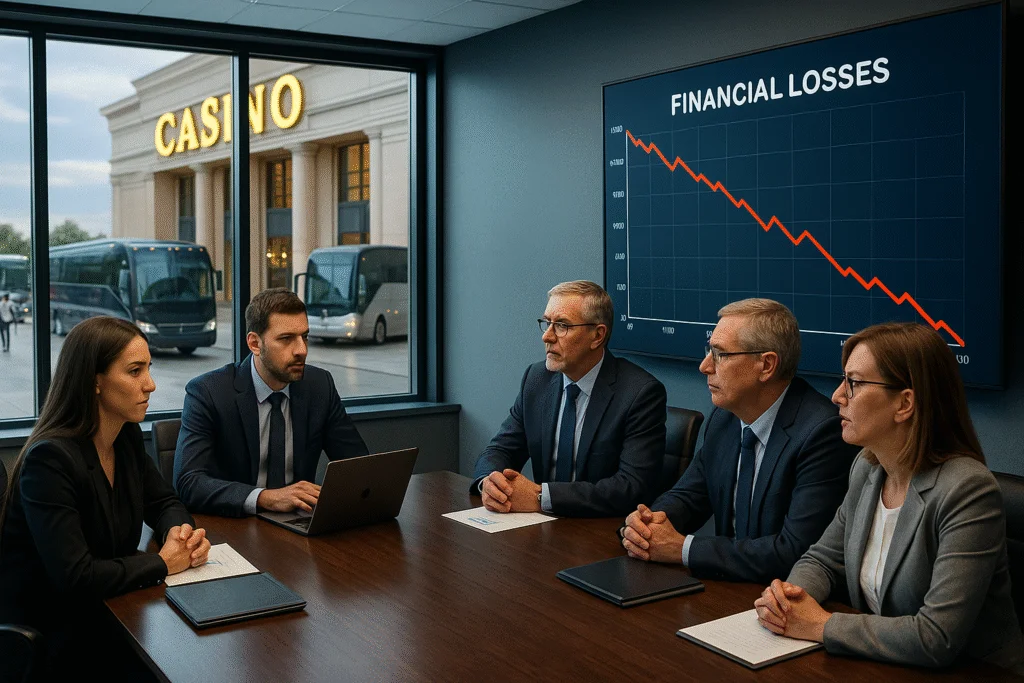
The sight of a coach bus idling in a suburban parking lot or a city corner, waiting to transport a group of passengers to a distant gaming resort, is a staple of the North American landscape. These casino bus programmes, often referred to as line runs or junkets, operate on a complex economic model that goes far beyond simple transportation. While on the surface it appears to be a convenient travel service, the underlying financial structure is a carefully calibrated ecosystem designed to benefit specific stakeholders while capitalizing on the behavioral patterns of different demographic groups. To understand who truly benefits from these programmes, one must look past the complimentary buffet vouchers and analyze the flow of capital between the casinos, the bus operators, and the passengers themselves.
The Casino Perspective: Customer Acquisition and Retention
For the casino operator, the bus programme is a primary tool for customer acquisition. In the competitive world of gaming, the most significant hurdle is physically getting the customer through the door. Once a person is on the gaming floor, the house edge ensures that, statistically, the casino will eventually capture a percentage of their bankroll. The bus service essentially removes the friction of distance and the cost of travel, acting as a direct pipeline for revenue.
Casinos do not typically run these buses at a profit in terms of ticket sales. In fact, many programmes are heavily subsidized. The casino might pay the bus company a flat fee per trip or a bounty for every passenger delivered. To the casino, the cost of the bus and the free play incentives given to passengers are categorized as marketing expenses. They are willing to lose money on the transportation because the projected theoretical win—the amount the casino expects to make from a player based on time spent and average bet size—is significantly higher than the cost of the seat.
The Bus Operators: Thin Margins and High Volume
The companies that own and operate the buses occupy a unique niche in the transportation industry. Unlike charter services where a group pays a lump sum, or public transit supported by tax dollars, casino bus operators rely on a hybrid of ticket sales and casino subsidies. Their business model is entirely dependent on volume.
Fuel costs, insurance, driver wages, and vehicle maintenance are fixed burdens. To remain profitable, these operators must maintain high occupancy rates. This is why you will often see aggressive marketing in specific neighborhoods. The bus operator benefits from a consistent, predictable schedule that keeps their fleet moving. However, they are also at the mercy of the casino contracts. If a gaming resort decides to slash its subsidies or change its incentive structure, the bus operator can see its profit margins vanish overnight. This creates a symbiotic, yet sometimes tense, relationship where the operator provides the logistics and the casino provides the financial lifeblood.
The Senior Demographic: Social Utility vs. Economic Drain
It is no secret that a large percentage of casino bus passengers are retirees. For this demographic, the benefits are often more social than financial. Many seniors live in relative isolation, and the bus trip provides a structured social outing. It offers a sense of community, a change of scenery, and a “day out” for a relatively low upfront cost.
However, from a purely economic standpoint, this group is often the most vulnerable. While the casino provides free play or meal credits, these are designed to keep the individual at the machine longer. For a senior on a fixed income, the loss of even a small amount of discretionary capital can have long-term effects. The benefit they receive is a subsidized day of entertainment, but the cost is often higher than they realize when the math of the gaming floor is applied over years of weekly trips.
Urban Outreach and the Economics of Convenience
Casino bus programmes often target urban centers where car ownership may be lower or where the hassle of driving and parking acts as a barrier to entry. By providing a direct link from an urban hub to a suburban or rural casino, the programme taps into a market that would otherwise be inaccessible.
In these scenarios, the passenger benefits from the convenience. They avoid the stress of traffic and the high cost of gas. For the casual gambler who treats the trip as a form of theater or a mini-vacation, the economics make sense. If the cost of the bus ticket plus the gambling loss is less than what they would spend on a concert or a sporting event, they view it as a fair exchange for entertainment. The “benefit” here is purely subjective and based on the individual’s value of their leisure time.
The Math of Incentives: The Illusion of “Free”
One of the most fascinating aspects of casino bus economics is the incentive package. A passenger might pay $20 for a ticket but receive $25 in “free play” and a $10 food voucher. On paper, the passenger has been paid $15 to take the trip. This is a powerful psychological trigger that makes the service feel like an unbeatable deal.
However, free play is not cash. It must be played through machines, and while doing so, the passenger is likely to spend their own money as well. Furthermore, the food vouchers are often only valid at specific outlets owned by the casino, ensuring that any additional spending stays within the house. The benefit to the passenger is the perception of a bargain, while the benefit to the casino is a guaranteed “captive” audience for a set number of hours. Unlike a local player who can leave at any time, the bus passenger is tethered to the bus schedule, ensuring they spend four to six hours on the property.
Impact on Local Economies and Small Businesses
When a casino bus programme brings hundreds of people to a gaming resort, the surrounding local businesses rarely see a dime. This is known as the “cannibalization” effect in economic terms. Because the bus drops passengers off at the casino door and the casino provides all necessary amenities (food, drink, entertainment), the passengers have no reason to explore the local town.
The primary beneficiary in the local sense is the municipal government through gaming taxes, but the local restaurant or retail shop often sees a decrease in foot traffic as discretionary spending is diverted toward the casino. The “service” benefits the corporate entity and the state’s tax coffers, but it can be a net negative for small business diversity in the region.
The Role of Data and Player Tracking
A hidden layer of the casino bus programme is the collection of data. To receive the bus incentives, passengers are almost always required to sign up for a player’s club card. This allows the casino to track every dollar spent, every game played, and the frequency of visits.
This data is incredibly valuable. It allows the casino to build a profile of the bus passenger and refine their marketing. They can identify which neighborhoods produce the highest-spending players and adjust the bus routes accordingly. In this sense, the passenger is not just a customer; they are a data point. The casino benefits from this long-term intelligence, which allows them to optimize their operations and maximize the “yield” from every bus seat.
Summary of Stakeholder Benefits
-
The Casino: Gains a steady stream of “captive” players and valuable consumer data while bypassing traditional geographic barriers.
-
The Bus Company: Receives guaranteed volume and subsidies that offset the risks of operating a traditional transportation line.
-
The Passenger: Receives highly subsidized transportation and a structured social experience, provided they can manage their gaming budget.
-
The State: Benefits from increased gaming tax revenue generated by the influx of out-of-town visitors.
Frequently Asked Questions
Why do some casino buses seem to target lower-income neighborhoods specifically?
From a purely logistical standpoint, casinos look for high-density areas where they can fill a 50-passenger bus quickly. However, critics point out that these programmes often target demographics that are statistically more likely to view gambling as a potential source of income rather than entertainment. The economics for the casino rely on volume and frequency, and high-density urban areas provide the most consistent pool of passengers.
Can a passenger actually make money by only using the free play and not spending their own?
While it is theoretically possible to use the “free play” and immediately stop, the environment is designed to prevent this. Most free play must be “cycled” through a machine, meaning you have to bet it. The odds are such that most people will lose a portion of it, and the psychological “near-miss” effect often encourages them to reach for their wallet to continue playing. Very few people have the discipline to treat the trip as a strictly “cost-free” endeavor.
How do bus programmes change the way casinos design their gaming floors?
Casinos often time their “bus arrivals” to coincide with slower periods, such as weekday mornings. They may adjust the density of lower-denomination machines near the entrance where bus passengers arrive. By understanding the arrival times, they can also ensure that buffet staff and floor attendants are positioned to handle the sudden surge in foot traffic, maximizing the efficiency of the “win” during the hours the bus is on-site.
What happens to the bus programme if gas prices spike significantly?
When fuel costs rise, the delicate balance of the bus programme is threatened. Usually, the casino will increase its subsidy to the bus operator to prevent a service disruption, as the loss of those passengers would be more expensive than the extra fuel cost. If the spike is permanent, the casino may increase the ticket price or reduce the value of the “free play” incentives to compensate for the higher overhead.
Are these programmes regulated by transportation authorities or gaming commissions?
They fall under both. The bus companies must adhere to Federal Motor Carrier Safety Administration (FMCSA) regulations regarding driver hours and vehicle safety. Simultaneously, the gaming incentives offered to passengers are often overseen by state gaming commissions to ensure that the marketing is not deceptive and that the “free play” is handled according to state gambling laws.
Do casinos use their own fleet of buses or hire third-party contractors?
Most casinos prefer to use third-party contractors. Operating a fleet of buses requires specialized mechanical facilities, a different class of insurance, and specific labor management. By contracting out the service, the casino can easily scale the programme up or down based on seasonal demand without the headache of maintaining a vehicle fleet.
How has the rise of online gambling impacted the traditional casino bus model?
Online gambling represents a significant threat to the bus programme economics. If a person can gamble from their living room, the “incentive” of a free bus ride and a buffet is less compelling. To counter this, many physical casinos are pivoting their bus programmes to emphasize the “resort experience”—high-end dining, spas, and live shows—that cannot be replicated on a smartphone screen.
