


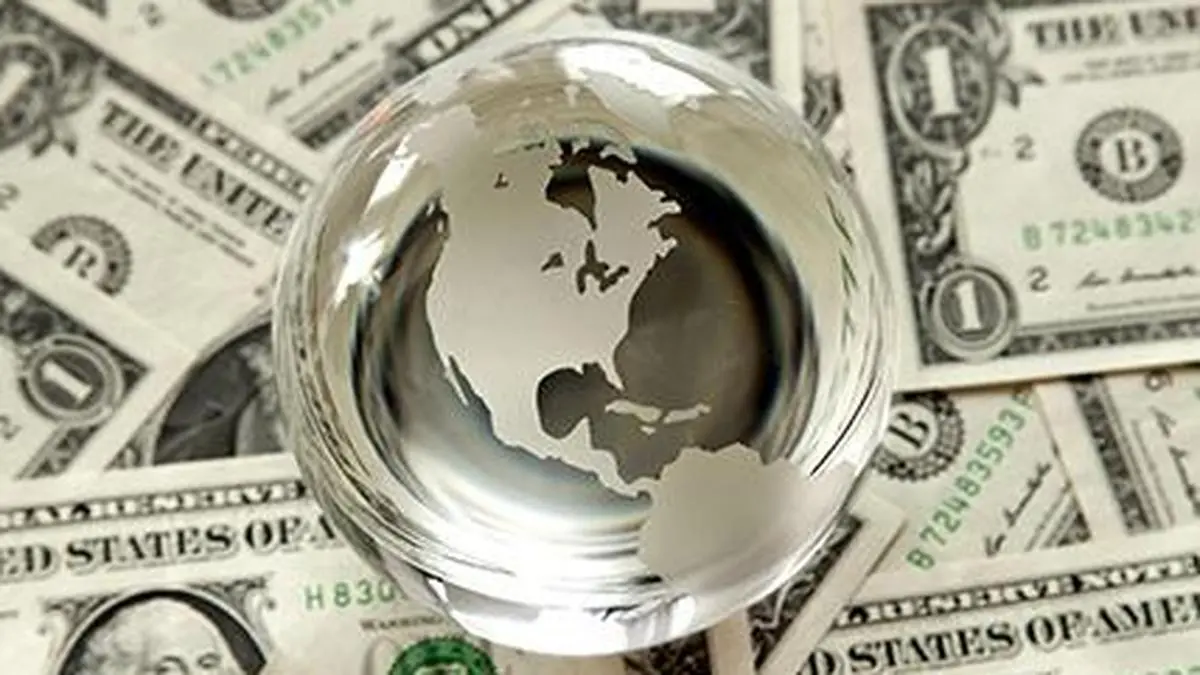
The global financial system is characterized by a unique structural imbalance known as dollar hegemony. Since the end of World War II and the subsequent collapse of the Bretton Woods gold standard in 1971, the United States dollar has served as the primary reserve currency, the standard for international trade, and the unit of account for the world’s debt. While this system provides a level of liquidity and a common language for global commerce, it creates a profound and asymmetric risk profile. Nations outside the United States find themselves tethered to the domestic monetary policy of the Federal Reserve, regardless of their own economic conditions. This centralization of financial power ensures that when the United States experiences economic shifts, the rest of the world feels the impact with amplified intensity.
The Structural Foundations of the Dollar’s Dominance
To understand the risks, one must first identify how the dollar became the indispensable axis of global finance. Approximately 80 percent of global trade is invoiced in dollars, and nearly 60 percent of global foreign exchange reserves are held in dollar-denominated assets, primarily U.S. Treasuries. This dominance is not merely a matter of preference but a structural requirement for many nations.
Because commodities like oil, gold, and agricultural products are priced in dollars, every nation must maintain significant dollar reserves simply to ensure it can keep its lights on and its population fed. This “exorbitant privilege,” a term coined in the 1960s, allows the United States to run large trade deficits and borrow at lower costs because there is a permanent, global demand for its currency. However, the flip side of this privilege is a systemic vulnerability for everyone else.
The Triffin Dilemma and Global Liquidity Risks
A core paradox of dollar hegemony is the Triffin Dilemma. This economic theory suggests that the country whose currency is used as the global reserve must be willing to supply the world with an extra supply of its currency to fulfill world demand for foreign exchange reserves, which leads to a trade deficit.
If the United States stops running deficits and tightens its money supply to protect its own inflation rates, global liquidity dries up. Conversely, if it runs massive deficits to provide the world with liquidity, the value of the dollar may eventually be called into question. This creates an asymmetric risk where the global economy is constantly at the mercy of U.S. domestic political and economic decisions. If the Federal Reserve pivots to a restrictive stance, emerging markets often face immediate liquidity crises, as the capital required to service their debts and pay for imports suddenly vanishes or becomes prohibitively expensive.
Monetary Policy Spillovers and the Global Financial Cycle
The most visible form of asymmetric risk is found in interest rate cycles. The Federal Reserve mandates its policy based on U.S. inflation and employment data. It does not have a mandate to consider the economic stability of Turkey, Brazil, or Indonesia.
When the Federal Reserve raises interest rates to combat domestic inflation, the dollar strengthens against other currencies. For a developing nation, a stronger dollar is a multi-front assault on their economy:
-
Imported Inflation: As their local currency weakens against the dollar, the cost of essential imports like fuel and grain rises, causing domestic inflation even if their own economy is stagnant.
-
Debt Servicing Costs: Many emerging market governments and corporations borrow in dollars because it is more stable than their local currency. When the dollar rises and U.S. interest rates go up, the cost of paying back that debt in local currency terms can skyrocket, often leading to sovereign defaults.
-
Capital Flight: Higher U.S. yields attract global investors. Money flows out of riskier emerging markets and into the safety of U.S. Treasuries, depriving developing nations of the investment capital they need to grow.
Weaponization of the Financial System and Sanctions Risk
In recent decades, the nature of dollar hegemony has shifted from a purely economic phenomenon to a geopolitical tool. Because the dollar is the primary medium of exchange, the U.S. government exerts significant control over the Society for Worldwide Interbank Financial Telecommunication (SWIFT) and the global banking architecture.
This allows the United States to implement financial sanctions that can effectively disconnect an entire country from the global economy. While sanctions are used to achieve specific foreign policy goals, their frequent application creates an asymmetric risk for any nation that may find itself at odds with U.S. interests. The freezing of central bank reserves and the exclusion from dollar-clearing systems have prompted many nations, including those in the BRICS bloc, to seek “de-dollarization” strategies. The risk here is systemic: if enough nations move away from the dollar to avoid geopolitical risk, the resulting fragmentation could lead to a volatile and less liquid global market.
The Safe Haven Paradox
During times of global crisis—even a crisis that originates in the United States, such as the 2008 financial meltdown—investors paradoxically flock to the U.S. dollar as a “safe haven.” This occurs because the dollar market is the only one deep and liquid enough to absorb massive amounts of capital during a panic.
This creates an asymmetric advantage for the U.S. economy. While other nations see their currencies collapse and their borrowing costs soar during a crisis, the United States often sees its borrowing costs decrease as the world buys its debt. This decoupling of risk means the United States is somewhat insulated from the global fallout of its own financial instability, while the rest of the world bears the brunt of the volatility. This lack of a “corrective mechanism” means that the U.S. can sustain fiscal policies that would cause a total collapse in any other country.
Asymmetry in Commodity Pricing
Since the “Petrodollar” agreements of the 1970s, the global energy market has been denominated in dollars. This forces every country to be a “price taker” twice over. A country like Japan or India must first worry about the market price of oil and then worry about the exchange rate of their local currency against the dollar.
If the price of oil remains steady but the dollar appreciates by 10 percent, the cost of energy for those nations increases by 10 percent. This adds a layer of volatility to the fundamental building blocks of an industrial economy that the United States simply does not have to manage. This disparity creates a competitive advantage for U.S. manufacturers and a constant inflationary threat for foreign competitors.
Conclusion
Dollar hegemony has provided a stable framework for the expansion of global trade over the last eighty years, but that stability has come at the cost of extreme asymmetry. The global financial system is currently designed such that the United States exports its inflation and its policy volatility to the rest of the world. As long as the dollar remains the sole pillar of international finance, nations will continue to operate under a shadow of risk that they cannot control. The increasing interest in digital currencies, bilateral trade agreements in local currencies, and alternative payment systems suggests that the world is beginning to react to these asymmetries, seeking a more balanced, albeit more complex, multipolar financial future.
Frequently Asked Questions
Does the United States benefit from the dollar’s high value in all circumstances?
No. While a strong dollar provides purchasing power and lower borrowing costs, it can also harm U.S. exporters. When the dollar is too strong, American-made goods become more expensive for foreign buyers, which can lead to a widening trade deficit and the loss of manufacturing jobs. This is one of the internal contradictions of being the reserve currency provider.
How does the Euro differ from the Dollar in terms of global risk?
While the Euro is the second most used currency, it lacks the unified fiscal backing of a single country. The Eurozone consists of many sovereign nations with different fiscal policies, which creates internal risks that the U.S. dollar does not face. Consequently, it has not been able to challenge the dollar’s role as the ultimate safe haven in times of extreme global stress.
What is de-dollarization and is it a realistic threat to the current system?
De-dollarization refers to the process of countries reducing their reliance on the U.S. dollar for trade and reserves. While many countries are currently increasing their holdings of gold and using local currencies for bilateral trade (such as China and Brazil), the sheer depth and liquidity of the U.S. Treasury market make it very difficult to replace the dollar entirely in the short to medium term.
How do digital currencies or “CBDCs” factor into the future of dollar hegemony?
Central Bank Digital Currencies (CBDCs) could theoretically allow nations to bypass the dollar-based SWIFT system for international settlements. If a network of CBDCs is established that allows for instant, peer-to-peer cross-border payments without clearing through a U.S. bank, it could significantly erode the U.S. government’s ability to monitor and sanction global transactions.
Why don’t developing nations just borrow in their own currencies to avoid dollar risk?
Most international investors are hesitant to lend in the currencies of developing nations because of the risk of high inflation or political instability. If a country wants to attract large amounts of foreign capital, it usually must offer debt in a “hard” currency like the dollar to reassure investors that they will be paid back in a stable value. This is known in economics as “Original Sin.”
How does dollar hegemony impact the fight against global climate change?
Climate transition requires trillions of dollars in investment, particularly in the Global South. Because these countries often have to borrow in dollars, high U.S. interest rates make the cost of financing green energy projects prohibitively expensive. This creates a situation where global environmental goals are inadvertently delayed by the monetary policy of the Federal Reserve.
What would a “multipolar” currency system look like?
A multipolar system would likely involve a basket of currencies—perhaps the Dollar, Euro, Yuan, and gold—sharing the role of global reserves. While this would reduce the asymmetric risk tied to the U.S. economy, it would likely result in higher transaction costs and more complexity in global trade, as businesses would have to manage multiple exchange rate risks simultaneously.
